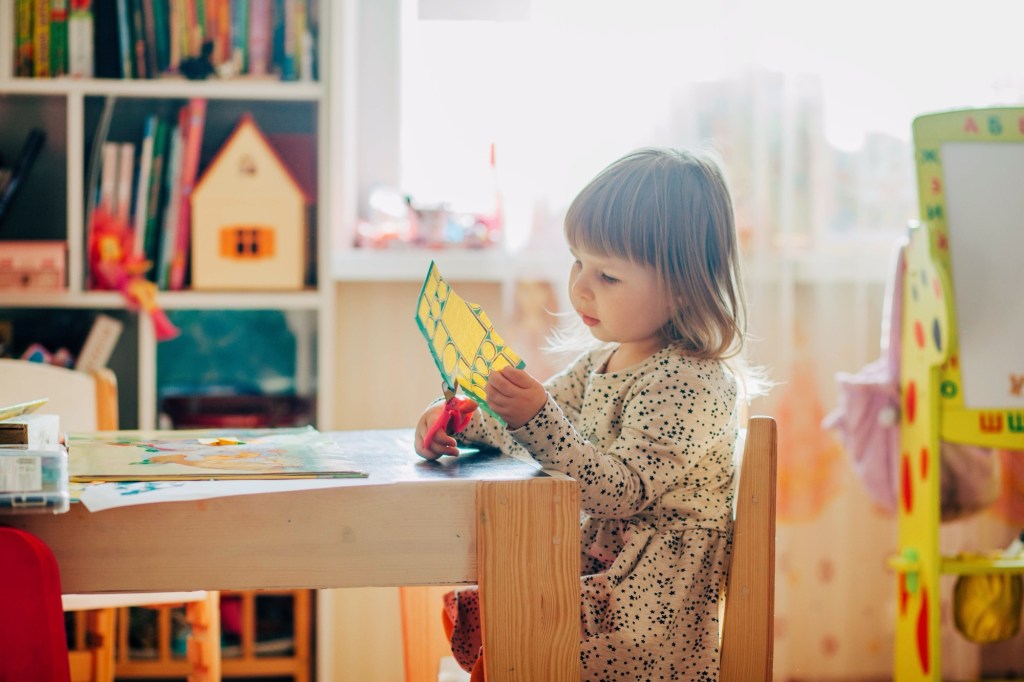
A boy in my class, let’s call him Leo, held his pencil like a spoon. He was eight years old, he could tell you everything about how a tadpole turns into a frog, and the moment a worksheet landed on his desk, his eyes went straight to the window. For weeks I assumed the words were the problem. They were third grade sight words, after all, and some of them are long and a little strange looking.
Then one afternoon I gave him a strip of paper with five words on it, a pair of scissors, and a glue stick, and asked him to build the sentence. He cut the words apart, moved them around on his desk, read them under his breath, and had the sentence glued down before I made it back to the front of the room. Then he looked up and asked, “Can I do another one?”
It was the first time all term he had asked for more of anything. And the words on that strip were the same words he had refused to look at the day before. The reading was exactly the same. He just needed a different way in.
The same word, three different children
Once I started watching for it, I saw the same pattern in almost every group I taught. There was always a Leo, a child who thinks best with his hands and needs to move something around before a word makes sense.
There was always Ava, too. Ava would sit quietly with a word search for as long as I let her, circling each word with real care, but she went pink and silent if I asked her to read aloud in front of the class. Give her a page she could work through on her own and she would find every single word.
And there was always a Sam. Sam had no interest in a word sitting alone on a page. Put that same word inside a short story with a couple of characters, though, and he would read it three times and then tell you what he thought should happen next.
If I had planned every lesson around one kind of page, I would have reached one of those three children. Leo would have been happy with cut and glue every day, Ava would have been tired by it, and Sam would have wondered where the story was. Variety meant all three of them got a turn at the activity that felt easy, and a turn at the ones that stretched them a little.
My take on different learning styles
You may have heard that every child is a visual, auditory, or hands-on learner, and that we should find out which one and teach that way. It sounds sensible, but researchers have tested the idea for years. A well-known 2008 review led by psychologist Harold Pashler found no good evidence that matching lessons to a child’s label helps them learn more.
What I see in my own classroom is simpler than labels. Children have different strengths, and different moods and attention spans from one day to the next. Leo still needs to sit and read on his own. Ava still needs to read aloud sometimes. When a child meets the same word in several different ways, that word gets more chances to stick, and the child gets to start from a place where they feel capable. I think of it as a way to build their confidence in learning.
What this looks like on the page
When I made the third grade pack for my shop, I gave every word four pages, each with a different kind of activity, so a child meets the word several ways in one sitting.
Take the word “together.” On the first page, Meet the Word, the child reads it, touches and spells each letter, and colors a heart when they are done. On the second page they hunt for “together” hidden among look-alike words and color it, choose the missing letter, find it inside a sentence, and answer a yes or no question. The third page is the one Leo would have loved. First the child decides which pictured child is saying a sentence that makes sense, then cuts out five words, puts them in order, and glues them down. The fourth page is for every Sam out there, a short six-sentence story about Dan and Kate, followed by counting how many times “together” appears.
By the last page, a child has read “together” again and again, and most children never notice they have spent the whole time practicing one word. All of that repetition is still happening, spread across four different tasks.
Review that feels like play
The review section gave me room to think about all three children at once. The word searches are Ava’s kind of page, quiet and focused, with a clear finish line. The Tic-Tac-Toe and Four in a Row boards are for the Leos, who would much rather play against a partner than sit alone with a pencil. And because the flash cards come in three sizes, you can print the small ones twice and turn them into a memory game, which tends to pull in the children who were watching from the side.
Third graders can be surprisingly competitive, and a game gives a struggling reader a reason to read a word quickly that has nothing to do with being tested. I have watched a child who dreaded reading aloud call out “never” and “myself” with total confidence because they wanted to win the round.
How to rotate at home or in the classroom
You don’t need to plan anything complicated. Watch for the page that gets the “Can I do another one?” from your child or your students. On a tired day, start there, because a good first five minutes makes the rest of the session easier. On a good day, try the page they usually avoid and keep it short.
If a child’s attention starts to drift, switch to a different kind of page before you switch to a new word. Often the word is fine and the activity just needs a change. And if you are working with a small group, try letting each child pick their favorite page type once a week. They will tell you a lot about how they learn without saying a word.
By the end of that school year, Leo was reading his cut and glue sentences out loud to whoever sat next to him, whether they wanted to hear them or not. He started with scissors, and the reading came along with them.
If you would like to try this kind of rotation with the 41 Dolch third grade words, the 3rd Grade Sight Words Printable is in my Etsy shop here: https://littlestepprintables.etsy.com/listing/4608002617. You can read more about what is inside the pack in my post announcing it here: https://littlestep-printables.com/2026/11/02/3rd-grade-sight-words-printable-the-last-pack-in-the-dolch-sight-words-series-is-here/. I also have sight words and early reading books on Amazon.
Small steps still lead to big learning moments.


Leave a Reply