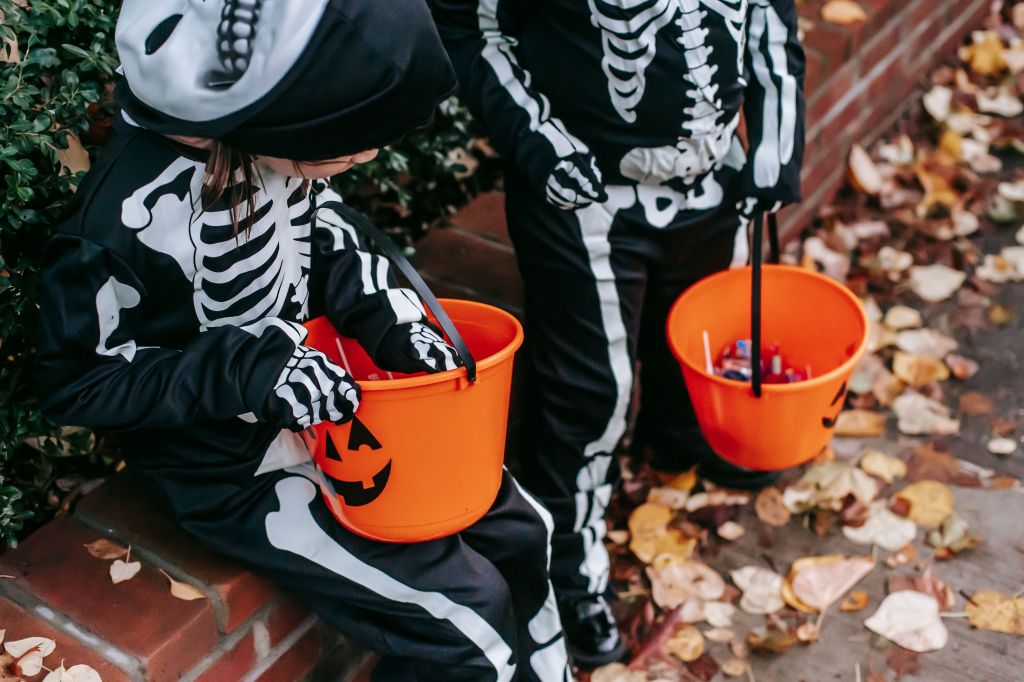
The day after our class Halloween party, a little boy I’ll call Harry sat at the reading table with a picture book open in front of him and a very stuck look on his face. We had been working on the same short page all week. He knew the pictures. He knew the story. The words just were not landing yet, and he had started doing that thing young children do when they feel unsure, which is rubbing his eyes and asking if it was almost snack time.
Then his candy bag from the party slid off the chair next to him. He picked it up, tapped the front, and said, without any hesitation at all, “That says BOO.”
It did. Big orange letters, a little ghost floating beside them. And then he started pulling out wrappers and “reading” them to me one by one, proud as anything. Some of what he said was right. Some of it was a confident guess based on the color of the wrapper. All of it was a child who, five minutes earlier, had told me he couldn’t read.
What was actually happening
Teachers have a name for the words children meet out in the world: environmental print. Signs, labels, cereal boxes, store logos, the word on a stop sign. Many children “read” these long before they can read a sentence in a book, and for a long time it can look like a party trick. Is he really reading, or is he just recognizing the red shape and the familiar picture? My own daughter, who is just a little over two, can also recognize the word from the picture books we have read.
Honestly, at first it is mostly the second one. A young child sees the color, the shape, the little ghost, and connects it to what they already know. But that is not nothing. It is the moment a child figures out that those marks on the bag mean something, and that the meaning stays the same every time. That idea, that print carries a message, is one of the quiet foundations everything else is built on. You can’t teach a child to read words they don’t believe are worth reading.
What struck me most about Harry was not the words he got right. It was the change in his face. In the book, reading felt like a test he was failing. On the candy bag, reading felt like something he already owned.
Why this week is such a gift
Halloween might be the most word-filled week of the whole year for a small child, and most of it happens at their eye level. There are BOO signs taped to front doors, TRICK OR TREAT painted on windows, little pumpkins with names written on them, costume bags, party invitations, and of course, an entire pillowcase full of wrappers at the end of the night.
You don’t need to plan anything to make use of it. On the walk between houses, you can point at a sign and wonder out loud, “I wonder what that one says.” When your child spots a word they know, let them be the expert. If they read a wrapper wrong, you don’t need to correct it on the spot. You can simply say, “Let’s look,” and run your finger under the word as you read it together. The finger matters more than it seems. It gently moves their attention away from the color and picture and onto the letters themselves, which is the next step after logo reading.
The candy sorting that happens on every living room floor on November 1st is another lovely moment. Children love to sort, and sorting by the words on the wrapper is a game they won’t recognize as practice. Which ones say the same thing? Which word is the longest? Can you find the one with your letter in it? A few minutes is plenty, and if your child would rather just eat the candy, that is a perfectly reasonable choice too.
For teachers and caregivers too
In my classroom, I’ve found that a few empty wrappers or a photo of a Halloween sign on the whiteboard can spark more excitement than a brand new book. Children bring in what they’ve spotted, and suddenly the quiet ones have something to share, because everyone has walked past a sign. If you care for little ones during the day, or you’re a grandparent with a small trick-or-treater visiting, the same thing works. Ask them to show you the words they know. You may be surprised how many there are.
I wrote a while back about the gentle ways children start noticing letters before anyone sits them down to learn, and environmental print was one of them. What Halloween adds is the motivation. A child will work hard to read a word that is attached to chocolate.
Where Harry ended up
I didn’t throw out the picture book that week. We went back to it, but I let Harry bring his BOO bag to the reading table, and we started each session by reading it first. It took him about two seconds and he grinned every time. Then we turned to the book. He still found it hard, but he came to it as a reader, not as a child who couldn’t read. That small shift carried him further than any extra practice page would have.
So this week, when your little one holds up a wrapper and tells you what it says, take it seriously. They are telling you something true. They have figured out that words mean something, and that they can understand some of those words on their own. That is a beginning worth celebrating, candy and all.
If your child loves spotting words out in the world, you’ll find printable activity packs for ages 3 to 6 in my Etsy shop, made for exactly this kind of gentle, playful practice. My sight words and early reading books are also available on Amazon, whenever you’re ready for a next step together.


Leave a Reply