At pickup one afternoon, I watched a boy hand his teacher a finished worksheet, say a polite goodbye, and walk calmly toward the car line. According to his teacher, he had been that way since eight in the morning, patient during circle time, generous about sharing the good crayons, first in line without being asked twice. The child who reached his mother in the parking lot two minutes later was someone else entirely. He dropped his backpack in the middle of the sidewalk, burst into tears because his sock had bunched up inside his shoe, and would not be consoled by anything she tried. She looked at me over the top of his head, a little embarrassed, and said the sentence I have heard more times than I can count. He is never like this at school.
I told her what almost ten years in a classroom, and a few years of parenting on top of that, have taught me. He is never like this at school because school is where he is holding it together. You are where he finally gets to stop.
There is a name for this now, restraint collapse, and it has been getting more attention lately, which I am glad about, because for a long time parents were left to assume a meltdown at pickup meant something had gone wrong, or that they were somehow the cause. The truth is closer to the opposite. A child does not fall apart in front of the person they trust least. They fall apart in front of the person they trust most, because that is the one person they do not have to perform for.
What nobody tells you is how much of the school day is performance, even for a five year old. Sitting still when your body wants to move. Waiting your turn when you want the answer to be yours. Reading the teacher’s face to know if you got it right. Working out a dispute over a shared glue stick without an adult stepping in to referee it. None of this is dramatic. None of it makes the newsletter home. But it adds up, the way holding your stomach in all day adds up, and by three o’clock there is nothing left to hold anything in with.
I used to think my job in that moment, whether I was the teacher watching a handoff or later the mother receiving my own daughter at the end of a long day at nursery, was to fix the immediate problem. The sock. The shoe. The thing that seemed, on its face, far too small to be worth this much crying. I would explain, reason, offer solutions. None of it worked, because none of it was actually about the sock.
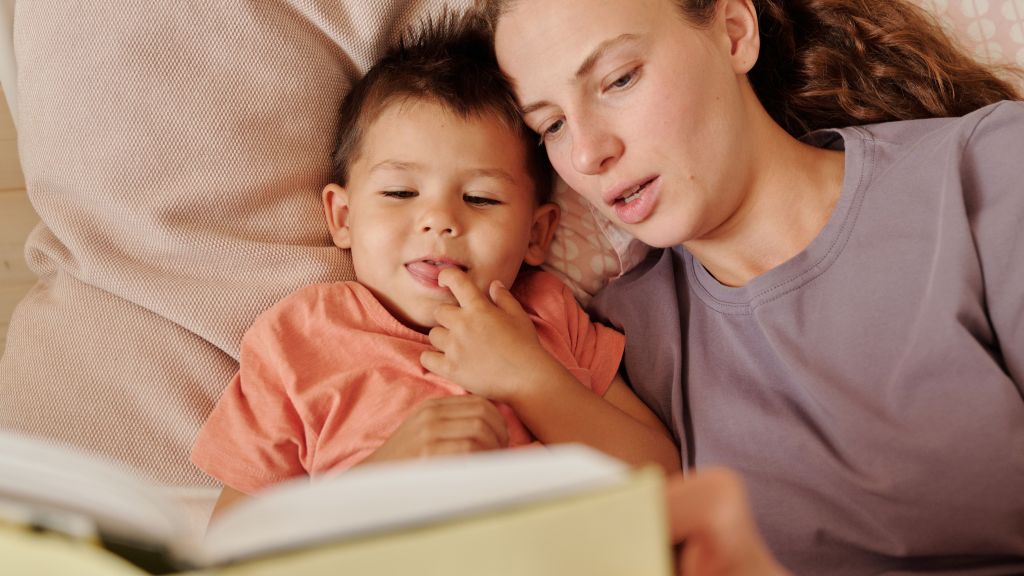
What started working, almost by accident, was much quieter. On one particularly rough afternoon, out of things to say and honestly a little worn down myself, I sat down on the floor with my daughter and simply opened a book. I did not ask her to calm down first. I did not ask about her day. I read the first page in the most ordinary voice I had, the way I would if nothing at all had happened. By the second page, she had crawled into my lap. By the fourth, she was pointing at the pictures. The crying had not been solved. It had simply been given somewhere to land.
I have thought about that afternoon often since, both as a teacher and as a mom. A book does something a conversation cannot in that particular window right after school. It does not ask a tired child to explain themselves. It does not require them to be reasonable yet. It gives them a task with no wrong answer, sit here, listen, look at the pictures, and it gives you something to do with your hands and your voice besides trying to talk someone down from a feeling that was never going to respond to logic in the first place. The story becomes the bridge back to each other, and often, by the time it is finished, whatever caused the collapse has quietly lost its grip.
This will not work every single time, and I want to be honest about that. Some afternoons call for a snack first, or a long hug, or simply time. But if you have a child who saves their hardest moments for the second they see you, know that it is not a behavior problem and it is not something you caused. It is the highest compliment a small, exhausted person can pay you. You are the place they finally get to stop pretending. A few quiet minutes with a book, offered without an agenda, is sometimes the gentlest way to meet them there, whether you are a parent, a grandparent, or the caregiver who does pickup most days.
I have spent nearly ten years teaching, and I am also the mom behind Little Step Printables, so I see this particular handoff from both sides of the door more often than most people do.
If you are looking for calm, low pressure ways to fold reading into your evenings, I have printable activity packs for ages 3 to 6 in my Etsy shop, and sight words and early reading books on Amazon, made for exactly these unhurried moments together.
 Little Step Printables | Early Literacy Tips from a Teacher Mum
Leave a comment