There was a boy in my class who could rattle off every sight word on the list during our morning warm-up. Confident, quick, happy. He loved that part of the day. By the afternoon, when I sat with him for individual reading time and pulled out the same words on cards, something had changed. He’d slump a little. Get them wrong. Look away. I’d think, you knew these this morning, what happened?
What happened was the word “practice.”
Not literally, he didn’t know I was calling it that. But somewhere between the warm-up, which felt like a game we were all playing together, and the one-on-one card session, which felt like a test he could fail, his brain had shifted modes. And a brain in test mode is not a brain that learns easily.
I see the same thing happen at home, in the stories parents share with me. A child who can find words on the page during a bedtime story has no idea what they are when the flashcard comes out. A child who breezes through the morning routine freezes when Dad sits down to “do some reading.” It is not a memory problem. It is a stakes problem.
The real reason play works
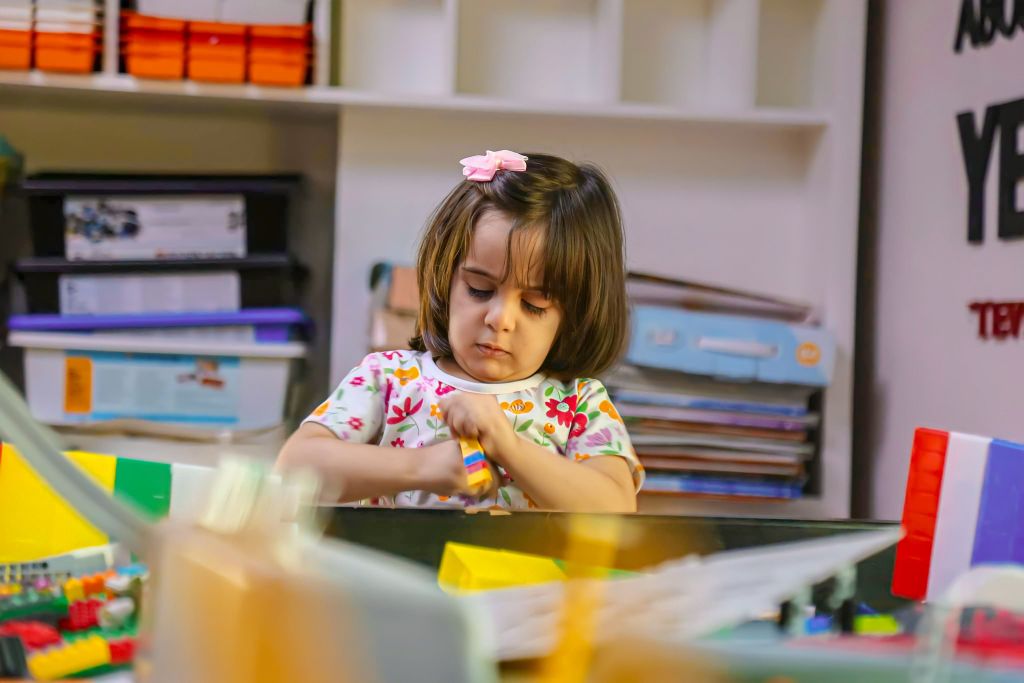
There is a temptation to think of play as the fun break from learning. The thing you do after the work is done. But for young children especially, play is not the opposite of learning. It is the most reliable path into it.
When a child is playing, their brain is relaxed, curious, and not monitoring itself for failure. That is exactly the state in which repetition sticks. A child who runs across the word “they” fifteen times during a card game does not feel like they have practiced “they” fifteen times. They feel like they had a good morning. But their brain got those fifteen exposures just the same, and they went in at a time when the child wasn’t bracing for a mistake.
Drilling, by contrast, puts the child in a state of alertness. Not the good kind, where they’re curious and reaching forward, but the anxious kind, where they’re watching themselves, anticipating getting something wrong, burning cognitive energy on self-monitoring that could have gone into actually absorbing the word.
The same word, the same number of exposures, very different outcomes. The difference is not the activity. It is the emotional temperature in the room.
What this looks like in practice (or rather, not in practice)
The shift I made in my own classroom was small but it changed everything: I stopped announcing that we were about to do sight words. Instead, the words were just there, woven into things we were doing anyway.
I would write a message on the board each morning and ask children to circle every time they spotted a particular word. Not because it was Word of the Week, just because I had written it in there a few times and I was curious if they’d find it. They always wanted to find it.
I would use words on movement cards. If the card said “them,” you had to hop. If it said “then,” you sat down. The children who could not get those two words straight on a flashcard to save their lives started getting them right immediately, because the stakes were zero and the physical movement made the distinction memorable.
I started leaving word hunts in the reading corner, little bits of paper with a target word and a tally box, tucked inside books. Find it, mark it. Nothing graded. Nothing timed. The children who found the most words were genuinely proud, but the ones who found zero still had a pleasant time looking.
None of this was sophisticated. It was just sight words, moved out of the context of test and into the context of life.
At home, the bar is even lower
Parents sometimes feel like they need a special curriculum or a structured system to make any of this work. You really don’t.
If you are reading a book together and a target word appears on the page, you can tap it without stopping the story. Your child sees it in context, in a moment of connection with you, and moves on. That’s an exposure. That counts.
If you write a short note and leave it in their lunchbox or on their pillow, “I love you, have a great day,” and you have used the words they are working on, they will read that note ten times if it came from you. They will read it to the dog. They will bring it back and read it again the next day. That is not nothing. That is a very good use of three minutes of your morning.
If you play snap or pairs with word cards and you do the dramatic groan when they beat you, they will want to play again. Not because they are trying to improve their reading. Because they are trying to beat you again.
Sight words need to be met many times before they stick. That is just how memory works, for children and adults alike. The goal is to make those meetings feel like something other than school, so that the child’s brain stays open and the words keep finding their way in.
Written by a classroom teacher and mum who has seen a lot of reluctant readers bloom the moment someone stopped calling it practice.
If you are looking for low-pressure activities that do exactly this, my printable activity packs for ages 3 to 6 are in my Etsy shop, designed to feel more like play than practice. For early readers moving into books, I also have sight words and early reading books on Amazon. Both are on the website.
 Little Step Printables | Early Literacy Tips from a Teacher Mum
Leave a comment