A mum sat down across from me at parent conferences last spring, notebook already open, pen ready, and asked before I’d even said hello. Should he know his sight words by now? Are we behind? Do we need flashcards at home?
I get some version of that question every year, and I understand exactly where it comes from. Sight words have become shorthand for “is my child on track,” and once that word enters a parent’s vocabulary, it tends to arrive with a low hum of pressure attached.
Here’s what I wish every parent knew going in. Sight words aren’t where reading begins. They’re one of the later pieces, resting on top of a handful of quieter skills that usually get far less attention, even though they’re doing most of the real work underneath.
Long before a child is ready to recognize a word like “the” on sight, their eyes need practice telling small differences apart. A lowercase b and a lowercase d look nearly identical to a brand new reader, and so do plenty of similar-shaped words. This skill, visual discrimination, grows through completely ordinary play: matching games, spot the difference pictures, sorting uppercase letters from lowercase ones, hunting for a specific letter hiding in a busy page. None of it looks academic. All of it is quietly training the eyes for what’s coming.
Alongside that, children need their spoken vocabulary to be doing some heavy lifting too, because a child can’t really understand a word they’ve never heard used in conversation. This is where storytime pays off in ways that have nothing to do with letters at all. Talking through a picture together, asking what a child notices or thinks might happen next, simply having rich back and forth conversation across the day, all of it builds the well of language that reading eventually draws from. Reading was never just decoding. It’s understanding, and understanding needs somewhere to land.
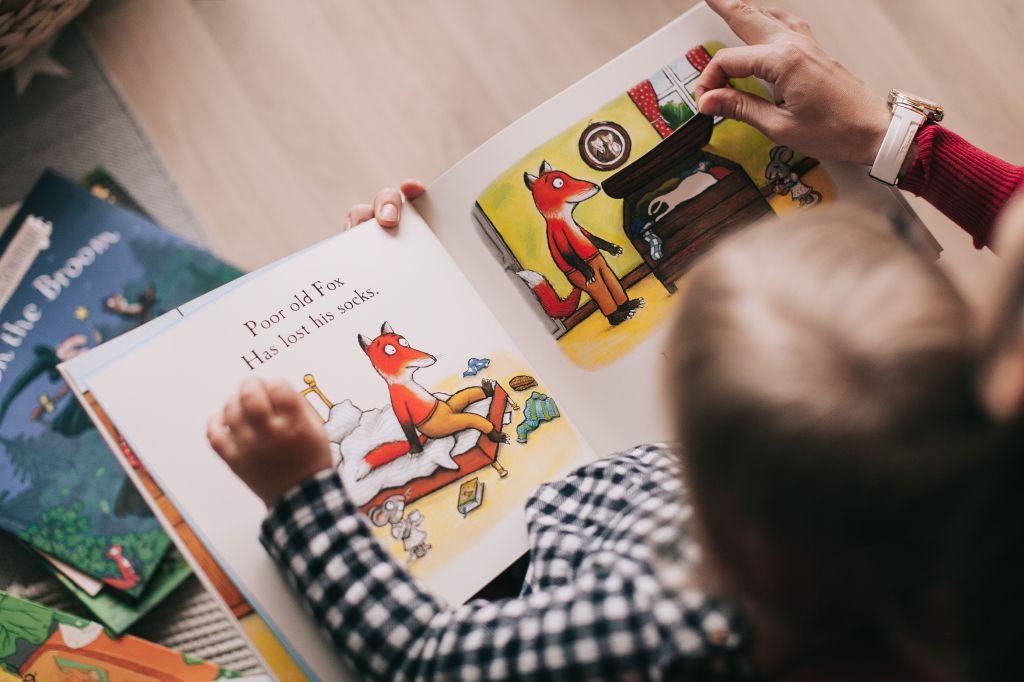
Then there’s print awareness, which is really just a child learning how books work before anyone asks them to read one independently. That we read left to right. That a gap means a new word has started. That the little squiggle at the end of a sentence means something. You build this almost without trying, just by running a finger under the words as you read aloud, letting your child turn the pages, pointing out a word that keeps showing up again in a favorite story. It sinks in quietly, the way most early learning does.
Two more pieces round this out, and you’ve likely heard me talk about both before, because they matter enough to deserve their own space. Letters need to be connected to their sounds early on, gently and without drilling, so that by the time sight words show up, a child already understands that print represents something spoken rather than a string of shapes to memorize. And hands need real strength before they’re expected to do fine, controlled work, whether that’s pointing accurately at a word or eventually holding a pencil. If either of those feels like the piece you need right now, I’ve written about both in more depth, on letter sounds and the alphabetic principle, and on building writing readiness without pressure.
So when does a child actually become ready for sight words? Usually once they know a good number of letters comfortably, show real curiosity about books, can visually tell shapes and patterns apart, and can sit through a short, playful learning moment without it feeling like a fight. When those things are in place, sight words can be introduced gently. Not drilled. Explored.
In my own classroom and at home, I try to treat sight words as exposure rather than performance. Short sessions. Encouragement over correction. Celebrating the attempt, not just the correct answer.
And if your child isn’t quite there yet, that’s genuinely fine. Some four year olds are already curious about words on a page. Some five year olds are only just beginning to notice letters exist. Both are completely normal. Strong foundations, laid patiently and without pressure, are what build confident readers, and confident readers arrive there step by step, never all at once.
If you’re just starting this stretch of the journey and want low pressure activities built with real classrooms and real homes in mind, my printable activity packs for ages 3 to 6 are designed for exactly this stage.
 Little Step Printables | Early Literacy Tips from a Teacher Mum
Leave a comment